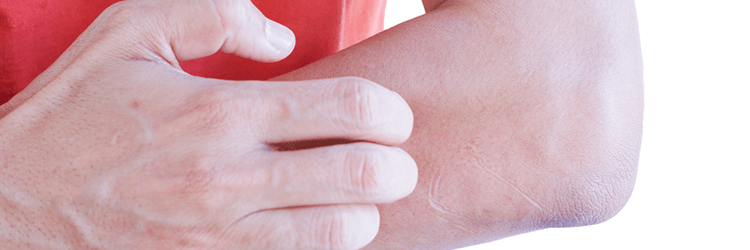
The five most common skin irritants that your home might be harbouring are:
- Clothing
All fibers can potentially cause irritants and allergic contact dermatitis. However, most allergic skin reactions to clothing are because of dyes, glues, chemical additives, formaldehyde finishing resins, and tanning agents used in the processing of fabric. Those who have atopic dermatitis are at greater risk of skin reactions from rough fabrics such as wool. If you experience itchiness or any kind of skin irritation with a certain fabric, take it out of your wardrobe. [1]
- Food
Foods can make your skin itchy, bumpy, chapped, scaly, or irritated. You may even have skin reactions after handling certain foods. Be very careful when you have cuts or cracks on your hands as handling acidic foods or spices can be irritating. [2]
- Fragrances
 A splash of cologne/deodorant makes you smell good, but it is formulated using several chemicals that aren’t skin-friendly. Fragrance allergies usually appear in the form of skin rash or hives. The rash associated with fragrance is characteristically located on the face, hands, and arms. [3]
- Soap
Toilet soap, dishwashing soap, and body washes could be the culprits as far as skin reactions are concerned. The practice of excessive hand washing can also strip your skin of its natural oils and make it dry and chapped. If you have sensitive skin, you are advised not to use a new soap as it can trigger an outbreak of itching, redness, or other types of inflammation. [4]
- Household cleaners
 Household cleaners do keep germs away but can sometimes be the reason for allergic skin reactions. So, be careful when using all-purpose cleaners, dish detergents, laundry detergents, drain cleaners, toilet disinfectants, and furniture polish. It is recommended to wear protective gloves while handling household cleaners. [5]
If you have identified the offending irritant, avoid it. If you can’t figure out the underlying cause of a skin reaction, see a dermatologist. He will give you a clear picture after understanding your day-to-day tasks, chores as well as drug and cosmetics use. Patch testing may be done to see if you’re sensitive to allergens that most commonly cause dermatitis.